
Slim Pickings From US-China Talks
Civilisation vs decline
China talks dominated by backsliding and concessions
Oligarchs study Chinese state while Americans protest data centres
War of choice on Iran shuts down a fifth of the world’s hydrocarbons
Related:
Maui’s Fire Hydrants Ran Dry; The Politics Of Water - H20 is being rationed in an attack on humanity (Sep 18, 2023)
UN Terrifies Youth To Push ‘Polycrisis’ - TV naturalist Chris Packham says it’s time to break laws to save Earth (Sep 24, 2023)
3 Crises - Iran, Ukraine, Tariffs - U.S. forces near position to strike Iran. Will Russia, China stand aside? (Feb 22, 2026)
(1,700 words or eight minutes of your company)
May 16, 2026
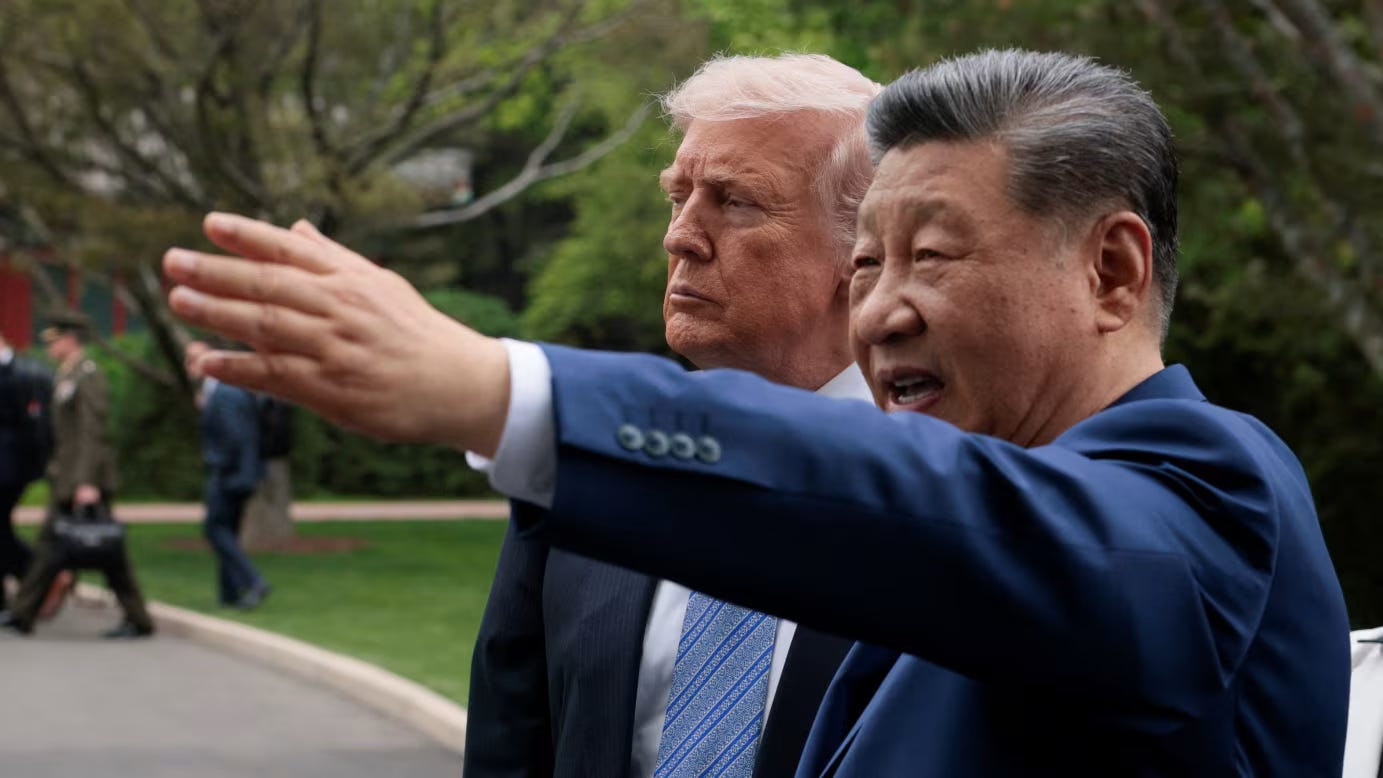
A lavish foreign visit, but little change for you back home. There were no major deals or dismantling of tariffs. Concessions were made, here and there, while U.S. oligarchs admired the Chinese state... the technocratic model they so highly regard, selectively, of course.
While president Donald Trump was in China, with dozens of tech executives, a scandal erupted in the U.S. over data centres, their plan and purpose.
Americans chose this very moment to rise up against the social costs of artificial intelligence and the surveillance state.
They may have paid scant attention to Trump’s visit to Beijing. If they did, they might have been angrier still.
Few wins
There were trade deals, but less than expected. The aim was to re-start trade that had been halted by the tariffs imposed at the outset of his administration. Restrictions were lifted from some goods previously classed as sensitive. China rejected an offer to let it use Nvidia’s H200 chip, preferring to focus on home grown AI chips.
In a missed opportunity, Trump’s talks with president Xi Jinping did not apparently focus on AI, either on cooperation or governance or energy policy.
Green loss
The war on Iran threatens chip manufacture which uses oil and gas byproducts like helium, sulphur and bromine. The world is discovering that hydrocarbons produce a huge range of chemicals — essential to making 6,000 products — which Green energy, solar panels and windmills cannot replace.
Then there is the issue of Taiwan, home to the world’s leading chip manufacturer. Beijing objects to its latest arms deal with the U.S. [1]
It is this competition that AI companies close to the U.S. military cite as justification for the massive roll out of data centres.
Environmentalists, whom governments promoted for years as the caring face of climate change, are suddenly condemned as agents of China because opposing U.S. data centres would allegedly place America at a disadvantage.
“Which outcome do you prefer as an American for your family? Would you prefer all of us who are building data centres put down our shovels and stop while the Chinese accelerate theirs?”
Thus spoke real estate developer Kevin O’Leary, in oleaginous tones, to Tucker Carlson.
The sheer size and number has got people asking what on Earth they’re for. Utah is building three data centres that in total cover twice the area of Manhattan — a video of citizens in Utah protesting the local council has gone viral.
Dying consensus
Data centres have exploded as the topic of the moment that joins so many dots.
Why so much AI and so demanding of resources? The project has overturned the “consensus on climate” that held fast for 20 or more years that we should limit industries that heat and pollute the atmosphere.
